


HEPA filters are a cornerstone of modern cleanroom technology, crucial for maintaining the stringent air purity required in environments where even minuscule particles can lead to significant disruptions or product contamination. This blog post delves into the mechanics of HEPA filters, their critical role in cleanroom operations, and best practices for their maintenance and testing.
Why HEPA Filters are Essential in Cleanrooms
HEPA filters are designed to trap 99.97% of particles that are 0.3 microns in diameter—the size at which filtration efficiency is typically lowest, known as the Most Penetrating Particle Size (MPPS). This high level of efficiency is essential for industries such as pharmaceuticals, biotechnology, and electronics, as well as other fields that require an environment free of particulate contamination.
Operation and Mechanism of HEPA Filters
- Filter Composition: HEPA filters are made from a mat of randomly arranged fibers, typically composed of fiberglass. The fibers’ diameters and the filter’s thickness play a crucial role in its performance.
- Filtration Mechanism: The filters capture particles through a combination of mechanisms, including interception, impaction, and diffusion. This ensures that even the smallest particles are trapped effectively, preventing them from circulating in the cleanroom air.
Installation and Integration in Cleanrooms
Proper installation of HEPA filters is critical for their effective operation. They are typically installed where the risk of contamination must be minimized:
- Air Handling Units: HEPA filters are used at various points in the air handling systems, including at air inlets to prevent external contaminants from entering the cleanroom.
- Point of Use: For highly sensitive areas within cleanrooms, additional HEPA filters may be installed to provide localized filtration.
Maintenance and Testing
To ensure ongoing effectiveness, HEPA filters require regular maintenance and testing:
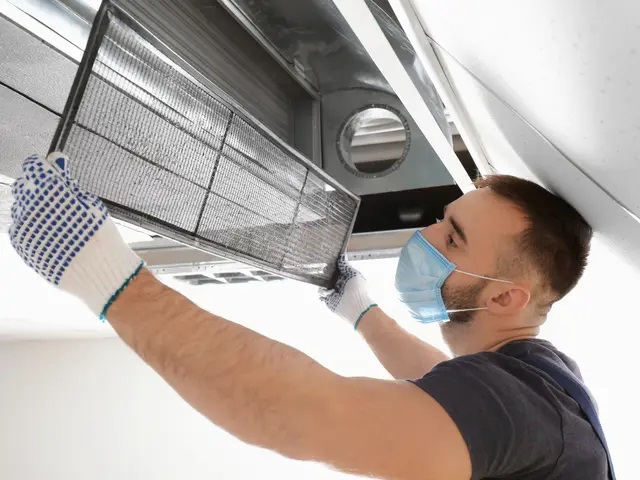
- Routine Inspections: Visual inspections and checks for seal integrity are essential to ensure there are no bypasses around the filter frame.
- Integrity Testing: Commonly conducted using a photometer and aerosol generator, integrity testing involves scanning the filter surface to detect leaks and ensure that the filter maintains its efficiency.
- Replacement Schedules: Depending on the cleanroom operations and detected levels of filter loading, replacement schedules must be strictly adhered to, preventing a decrease in filter performance and potential contamination risks.
Challenges and Considerations
Despite their efficacy, managing HEPA filters involves several challenges:
- High Operational Costs: The cost of purchasing, testing, and maintaining HEPA filters can be significant, especially for facilities that require large volumes of filtered air.
- Energy Consumption: HEPA filters cause a pressure drop in HVAC systems, which can increase energy consumption. Advanced systems designed to minimize this drop can help manage energy costs.
HEPA filters are an indispensable component of modern cleanroom technology, playing a crucial role in maintaining air quality and ensuring that cleanrooms meet the stringent standards required for sensitive industrial and research activities. By understanding their operation, integrating them correctly, and adhering to rigorous maintenance protocols, facilities can effectively manage air quality and contamination risks. Contact us for more information.