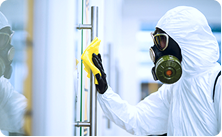
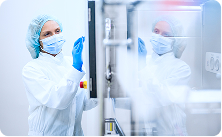
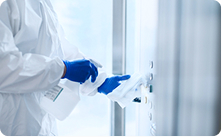


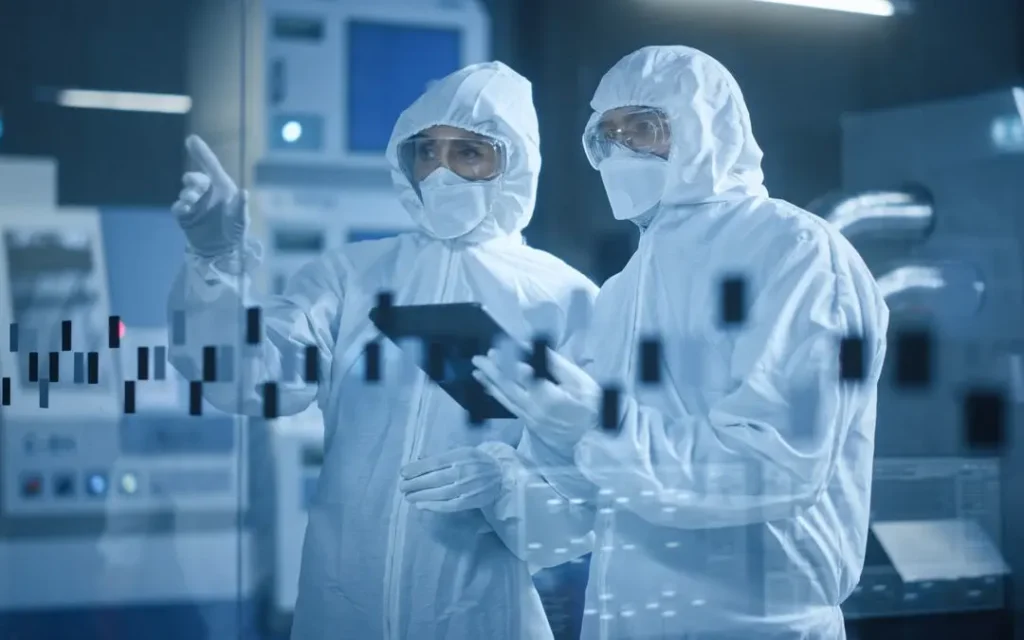
After a contamination incident, shutdown, construction event, or deep decontamination cycle, an organization with a cleanroom must demonstrate that the cleanroom can once again support controlled operations. This is where cleanroom requalification becomes essential. Requalification verifies that the environment can maintain its intended ISO classification, airflow behavior, pressure stability, and contamination-control expectations before the space resumes routine use.
However, requalification is not achieved through a single round of testing. It depends on continuous monitoring—before, during, and after the requalification phase—to confirm that the cleanroom remains stable as systems restart, personnel return, and processes resume. Continuous monitoring provides the data that facilities need to demonstrate recovery, prevent recurrence, and maintain ongoing contamination control.
This article explores how continuous monitoring strengthens requalification efforts and supports long-term cleanroom performance.
Why Requalification Matters After Decontamination
Decontamination resets the environment but also introduces change. Systems may have been shut down. Airflow may have shifted. Disinfectant use may have altered local microbial profiles. Equipment or personnel movement during recovery can also affect room stability.
Strong cleanroom requalification ensures:
- Particle levels are stable at rest and operational.
- Airflows behave as intended.
- Pressure cascades recover to validated ranges.
- Microbial levels meet expectations.
- Cleaning restores the environment to a controlled state.
- The room is ready for safe operational re-entry.
Continuous monitoring verifies that these parameters do not drift as the room comes back online.
Continuous Monitoring Before Requalification Begins
Before formal testing begins, continuous monitoring helps determine whether the environment is recovering as expected or requires additional cleaning or environmental adjustments.
Key pre-requalification monitoring includes:
- Tracking airborne particle trends after decontamination.
- Confirming pressure differentials stabilize consistently.
- Observing temperature and humidity recovery.
- Identifying early viable recovery patterns.
- Reviewing airflow behavior during system restart.
This early data helps determine when the room is ready for requalification sampling.
The Role of Continuous Monitoring During Requalification
During the cleanroom requalification phase, continuous monitoring provides real-time insights that support stable environmental performance.
Monitoring helps facilities:
- Identify spikes in particle levels before they affect qualification.
- Detect areas where surface cleaning requires reinforcement.
- Observe environmental behavior when personnel are introduced.
- Understand how equipment startup impacts classification.
- Monitor airflow and pressure behavior under operating conditions.
This real-time feedback allows teams to address issues promptly rather than repeating complete qualification cycles.
Post-Requalification: Ensuring Stability Through Ongoing Monitoring
Even after requalification passes, continuous monitoring remains essential. Decontaminated spaces must demonstrate that the cleanroom performs predictably over time, not just during a single qualification window.
Ongoing monitoring supports:
- Early detection of environmental drift.
- Confirmation that cleaning cycles are effective.
- Trending of particle and microbial levels.
- Identification of recurring high-risk zones.
- Assessment of cleaning frequency adequacy.
- Evaluation of personnel or material-flow patterns.
This is the foundation of ongoing contamination control, ensuring the environment remains compliant throughout routine operations.
How Cleaning and Decontamination Support Continuous Monitoring
A requalification program is only as strong as the cleaning and decontamination practices behind it. Consistent, validated cleaning helps maintain stable conditions that continuous monitoring can verify.
Key cleaning contributions include:
- Resetting surface and airborne contamination after decontamination.
- Reinforcing disinfectant rotations to support microbial control.
- Adhering to validated wiping techniques and sequences.
- Maintaining clean-to-dirty directional flow.
- Supporting HVAC recovery through proper surface cleaning.
- Preparing the room for at-rest and operational testing.
Specialized cleaning providers help ensure that continuous monitoring reflects a stable, controlled environment—not one struggling to recover.
Common Issues Detected Through Continuous Monitoring
Continuous monitoring can identify issues that may not appear during isolated sampling events. Common concerns include:
- Drifting pressure differentials.
- Increased viable counts after personnel re-entry.
- Unexpected particle spikes during equipment startup.
- Areas missed during cleaning.
- Airflow disruptions from equipment placement.
- Contamination was introduced during material transport.
- Fluctuating temperature and humidity levels.
Detecting these issues early helps prevent failed requalification attempts.
Integrating Continuous Monitoring with Cleanroom Requalification Strategy
A strong requalification strategy integrates cleaning, environmental performance, and continuous data collection. Effective integration includes:
- Aligning cleaning cycles with monitoring trends.
- Using data to refine cleaning frequencies.
- Identifying high-risk surfaces or zones.
- Adjusting disinfectants or sporicidal cycles as needed.
- Coordinating with Facilities and QA for environmental stabilization.
- Documenting all actions that support requalification readiness.
This approach strengthens both requalification outcomes and long-term cleanliness.
When Continuous Monitoring Suggests the Need for Re-Cleaning
Not all rooms stabilize immediately after decontamination. Continuous monitoring identifies situations where additional cleaning is advisable, such as:
- Persistent particle spikes.
- Drifting viable counts.
- Inconsistent recovery after equipment startup.
- Unstable pressure cascades.
- Recurring issues tied to specific surfaces or activities.
Prompt re-cleaning helps avoid repeat qualification failures and protects overall contamination control.
Continuous Monitoring Strengthens Every Phase of Requalification
Strong cleanroom requalification depends on more than isolated testing—it requires continuous monitoring that demonstrates stability before, during, and after qualification activities. By combining validated cleaning and decontamination support with data-driven environmental oversight, facilities maintain reliable, ongoing contamination control and confidently bring cleanrooms back into operation.
If your facility needs support preparing cleanrooms for requalification or maintaining environmental readiness through validated cleaning and decontamination programs, VibraClean’s team can help. Contact us for more information.