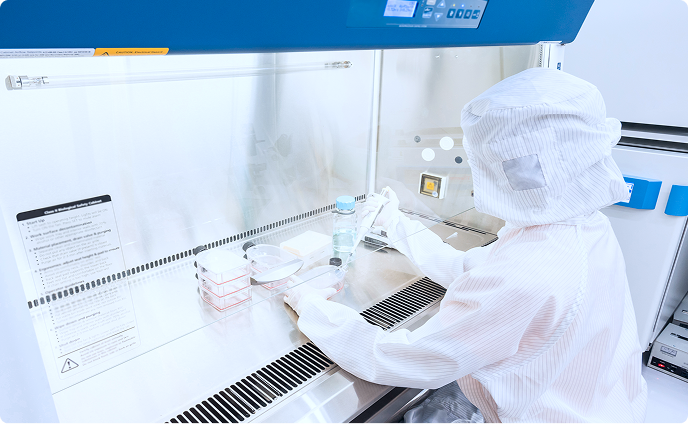
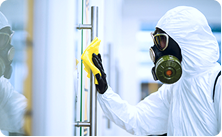
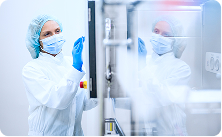



Ionized Hydrogen Peroxide (iHP®) is an effective method for deep decontamination in cleanrooms, laboratories, and controlled environments. Whether used after a contamination event, construction intrusion, shutdown, or routine reset, iHP decontamination delivers rapid, sporicidal, broad-spectrum microbial reduction. But while iHP is fast-acting, downtime can still accumulate if facilities don’t plan the before-and-after phases efficiently.
Reducing downtime is not only about the decontamination cycle itself. It depends on how the space is prepared, how the cycle is supported, and how the environment is stabilized after treatment. With the proper preparation and workflow, facilities can shorten recovery time, return the cleanroom to service sooner, and maintain strong contamination control during re-entry.
This article outlines how organizations can reduce downtime following an iHP event, and how smart iHP cycle optimization helps cleanrooms return to validated performance faster.
Why iHP Decontamination Is Used in Cleanrooms
iHP is often selected because it offers:
- Rapid room-scale decontamination.
- Broad-spectrum microbial reduction.
- Lower material compatibility risk compared to some alternatives.
- Minimal residue after aeration.
- Flexible application in small or large cleanrooms.
These advantages make iHP decontamination an excellent choice for controlled environments — but downtime still depends heavily on surrounding activities, not the chemistry alone.
Phase 1: Pre-Cycle Preparation (The Biggest Downtime Reducer)
Preparation is the largest controllable factor influencing downtime. Good preparation ensures the iHP cycle runs smoothly and the cleanroom is ready for rapid turnover.
Key preparation steps include:
- Removing unnecessary materials that slow air turnover.
- Opening equipment doors, drawers, and compartments as required.
- Staging the room to maximize vapor circulation.
- Covering or protecting sensitive components per SOP.
- Ensuring HVAC is in the correct mode before fogging.
- Coordinating timing with QA, Facilities, and operations.
- Confirming that the room has already been thoroughly cleaned.
iHP is not a replacement for cleaning. Surface debris, residues, or construction dust interfere with proper vapor distribution.
Strong pre-cycle preparation is a cornerstone of effective iHP cycle optimization.
Phase 2: Optimizing Room Layout for Efficient Treatment
The room’s physical layout affects how efficiently iHP reaches surfaces. Small adjustments can significantly reduce cycle times.
Important layout considerations include:
- Positioning items to avoid airflow shadowing.
- Ensuring carts, equipment, and furniture are not blocking circulation.
- Stabilizing pressure differentials to prevent vapor loss.
- Removing or elevating items that obstruct airflow under benches.
- Confirming that return air paths remain open.
Clear, unobstructed geometry allows the iHP cloud to spread evenly and complete its kill cycle faster.
Phase 3: Supporting the Aeration Phase
Aeration—not fogging—is often the longest part of the process. Supporting this phase well helps shorten downtime without compromising safety.
Strategies that accelerate aeration include:
- Ensuring clean HVAC filters that support proper turnover.
- Maximizing air movement within SOP limits.
- Preventing unnecessary door openings.
- confirming that air returns are unobstructed.
- Coordinating with Facilities to maintain stable airflow.
Facilities must avoid premature entry or adjustments that interfere with vapor dissipation. Stable airflow ensures quick and safe re-entry conditions.
Phase 4: Post-Cycle Cleaning and Surface Reset
After iHP, surfaces must be inspected and prepared for requalification or routine use.
This stage includes:
- Performing a post-cycle wipe-down if required by SOP.
- Removing any protective coverings applied pre-cycle.
- returning equipment and materials to normal configuration.
- Performing a light top-to-bottom cleaning to remove residual particles introduced during re-staging.
- Confirming disinfectant rotation alignment after the cycle.
These steps ensure that the cleanroom not only meets microbial standards but also aligns with routine cleaning practices.
Phase 5: Stabilizing the Environment for Requalification or Operations
After iHP decontamination, the room may experience temporary shifts in:
- Airflow behavior.
- Pressure differentials.
- Humidity.
- Particle load due to movement during re-entry.
Continuous monitoring or short-term checks help verify that the environment has returned to its intended state before regular operations resume.
Facilities typically verify:
- Pressure stability
- Acceptable airborne particle levels.
- Proper temperature and humidity.
- Readiness for personnel re-entry.
- Confirmation that the cleaning program prevents re-contamination.
This phase helps determine the right moment to restart production or begin requalification testing.
When iHP Cycles Require Additional Optimization
Certain conditions may require cycle adjustments, including:
- Large or irregular rooms.
- Complex equipment layouts.
- Material loads that absorb vapor.
- Multiple adjacent rooms requiring sequential treatment.
- Recent construction.
- High initial contamination levels.
A strong provider will recommend adjustments that support iHP cycle optimization without unnecessarily extending downtime.
How Specialized Support Helps Reduce Downtime
Specialists who regularly perform iHP cycles understand how to:
- Sequence preparation efficiently.
- Support multi-room or cascading decontamination.
- Manage equipment staging.
- Optimize room configuration.
- Coordinate cleaning before and after treatment.
- Prepare the space for re-entry and recovery.
Their experience helps minimize disruptions and shorten the time to bring the room back into service.
Better Preparation Leads to Faster Recovery
Reducing downtime after iHP decontamination is less about the fogging cycle and more about everything surrounding it. When facilities apply strong preparation, effective room setup, thoughtful aeration support, and careful environmental stabilization, they recover faster and maintain strong ongoing contamination control.
If your facility needs support preparing cleanrooms for iHP decontamination or restoring controlled environments efficiently after treatment, VibraClean’s team can help. Contact us for more information.