

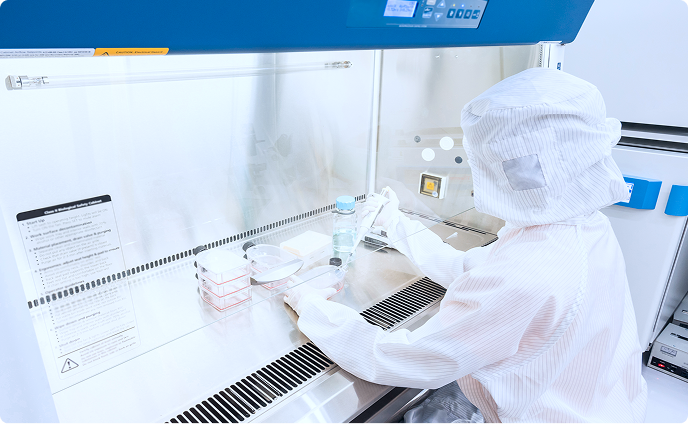






Sterile manufacturing environments depend on strict contamination control to protect product quality and patient safety. Even a minor lapse in facility decontamination can trigger a chain reaction of problems that are far more expensive than the effort required to prevent them. Poor decontamination doesn’t just threaten microbial control—it increases audit risk, disrupts production schedules, strains staffing resources, and exposes the organization to regulatory penalties.
Because contamination often begins at the microscopic level, the early warning signs are easy to overlook. But once contamination appears in environmental monitoring or downstream testing, the operational and financial consequences escalate quickly. This article outlines the hidden costs of improper decontamination and why a validated, well-executed decontamination program is essential for sterile manufacturing.
Contamination Spreads Faster Than Most Facilities Realize
Cleanrooms are highly engineered environments, but even small decontamination failures can spread contamination through:
- Airflow disturbances.
- Personnel traffic.
- Shared equipment or tools.
- Door openings and pressure fluctuations.
- High-touch surfaces are not cleaned consistently.
- HVAC backflow or pressure cascade failures.
When contamination escapes its point of origin, the cost to remediate grows exponentially—turning a local problem into a facility-wide disruption.
Production Downtime and Lost Batches
The most immediate and measurable cost of improper facility decontamination is downtime. When a cleanroom fails environmental control, manufacturing must stop while:
- EM samples are re-tested.
- Decontamination cycles are repeated.
- Root cause investigations occur.
- Equipment is quarantined.
- Operators are retrained.
In sterile manufacturing, even one day of downtime can be costly. When contamination affects a high-value product or short-shelf-life biologic, the financial impact multiplies.
Lost batches are among the most expensive consequences. Even if only one vial or syringe tests positive for contamination, regulators often expect the entire batch to be discarded unless proven otherwise—something rarely achievable.
Strong decontamination programs play a critical role in downtime prevention, protecting operational continuity.
Increased Audit and Inspection Scrutiny
Improper decontamination directly impacts audit risk. Regulators view contamination excursions as signs that a facility may not be in control. During FDA, EMA, Health Canada, or internal corporate audits, contamination-related findings often lead to:
- 483 observations.
- Warning letters.
- Escalated inspections.
- More frequent audits.
- Mandatory requalification.
- Extensive CAPA programs.
Common audit findings tied to decontamination include:
- Unvalidated decontamination cycles.
- Inconsistent sporicidal use.
- Poor cleaning documentation.
- Failed HEPA integrity tests linked to contamination.
- EM trends not acted upon.
- Improper or unclear root cause investigations.
Once a facility gains a reputation for contamination issues, the audit burden increases for years—not months—adding cost, time, and operational strain.
Higher Environmental Monitoring (EM) Workload
When decontamination is ineffective, environmental monitoring becomes more difficult. Facilities experience:
- Spikes in viable counts.
- Increased alert and action limit breaches.
- Repeat sampling.
- Additional plates, swabs, and testing.
- Trend reviews and deviation investigations.
- Increased QA oversight hours.
These extra EM cycles quickly become expensive, especially when compounded across multiple cleanrooms or process areas.
Ineffective decontamination also causes EM “noise,” making it harder to detect actual contamination events early. This can delay root cause identification and prolong investigations.
Premature Equipment Wear and Cleaning-Related Damage
Improper decontamination often leads to overcorrection—facilities switch disinfectants too aggressively, apply excessive chemical volumes, or use incompatible sporicides during panic responses. These missteps can damage:
- Stainless steel surfaces.
- Polymer floors.
- Gaskets and seals.
- Isolator gloves.
- HEPA housings.
- Sensor housings and instruments.
Equipment replacement or repair becomes another unexpected cost of insufficient or poorly designed decontamination routines.
A validated, predictable decontamination process protects surfaces, tools, and equipment lifespans, reducing maintenance burdens and supporting downtime prevention.
Increased Training, Retraining, and Supervision
Contamination events trigger retraining requirements. When contamination occurs due to cleaning mistakes or behavioral drift, teams must undergo:
- Refresher training.
- Requalification for cleaning techniques.
- Updated gowning procedures.
- Additional operator observations.
- More QA presence on the floor.
The labor cost of retraining—not to mention lost productive hours—can exceed the cost of the contamination incident itself.
Facilities with strong decontamination programs dramatically reduce retraining needs because their processes are consistent, validated, and easier for staff to execute correctly.
Supply Chain and Scheduling Disruptions
When a cleanroom shuts down or fails classification, the ripple effect impacts:
- Material release timelines.
- Batch scheduling windows.
- Equipment availability.
- Cleaning cycles for adjacent rooms.
- Sterilizer and autoclave load planning.
- Downstream packaging operations.
Suppliers may be delayed, customers may be placed on backorder, and critical product launches may slip—all traced back to insufficient facility decontamination.
Facilities often underestimate how closely scheduled modern sterile manufacturing operations are. Even minor disruptions can cascade into high financial and reputational costs.
Loss of Client or Contract Manufacturing Confidence
For CDMOs and contract manufacturers, contamination issues erode client trust quickly. Even a single contamination event can lead customers to question:
- Whether products are being manufactured safely.
- Whether the facility meets GMP expectations.
- Whether additional testing or qualification is needed.
- Whether the partner is capable of supporting future scale-up.
In competitive markets, contamination issues can cost a CDMO an entire customer portfolio.
A well-validated decontamination program helps maintain customer confidence and strengthens commercial reputation.
The Real Solution: Validated, Repeatable Decontamination Cycles
Avoiding these hidden costs requires a holistic approach, including:
- Validated manual cleaning cycles.
- Validated sporicidal rotations.
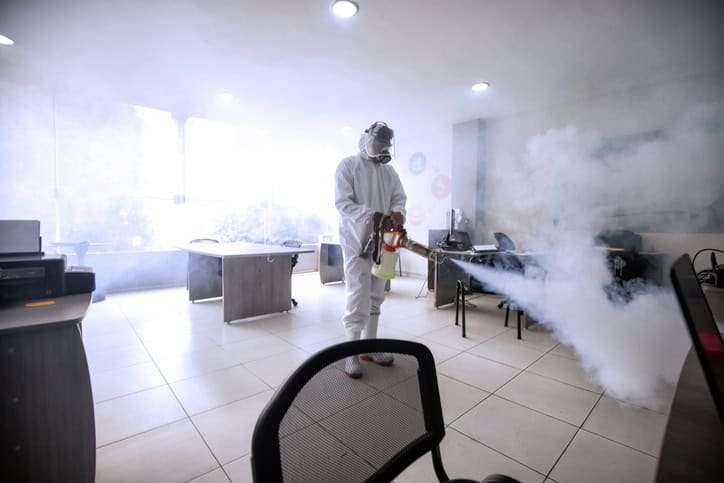
- Validated room decontamination technologies (VHP, iHP®, fogging).
- Clear SOPs for routine and event-based cleaning.
- Defined acceptance criteria for EM.
- Strong root cause investigation.
- Documented operator training and requalification.
- Integration of decontamination into the facility’s contamination control strategy.
When data supports your decontamination approach—and operators are trained to perform it consistently—facilities reduce audit risk, avoid unplanned downtime, and stay compliant.
Decontamination Failures Are Expensive—Control Is Essential
Improper facility decontamination may start small, but its hidden costs accumulate fast. From lost batches and regulatory observations to equipment damage and scheduling delays, the financial and operational impact is far greater than most teams expect. A validated, operator-friendly decontamination program is one of the most substantial investments a sterile manufacturing facility can make in stability, compliance, and downtime prevention.
If your facility needs support validating decontamination processes, improving contamination control, or strengthening cleaning programs, our specialists can help. Contact us to discuss your requirements.