


Moving a cleanroom from construction to a fully operational, GMP-aligned environment requires more than completing the build. Dust, drywall residue, construction materials, microscopic debris, and microbial contamination can linger long after contractors leave. Without a disciplined, validated approach to cleanroom commissioning, these contaminants can compromise environmental control, delay qualification, and disrupt production timelines.
Commissioning is a critical transition phase where cleaning, decontamination, and environmental preparation bridge the gap between a newly built space and a fully controlled, audit-ready cleanroom. This is also the point at which post-construction cleaning and EMPQ (environmental monitoring performance qualification) cleaning play essential roles in ensuring the cleanroom meets its design intent and is ready for occupancy, equipment staging, and initial environmental qualification.
This article outlines what must happen during this transition and why thorough contamination-control preparation is essential to the long-term success of any cleanroom.
Why Cleanroom Commissioning Matters
Newly constructed cleanrooms look “clean,” but construction leaves behind:
- Gypsum dust.
- Silica particles.
- Metal fragments.
- Insulation fibers.
- Adhesive residues.
- Microbial contamination introduced through HVAC inactivity.
- Contaminants embedded in porous or difficult-to-reach surfaces.
These contaminants can jeopardize environmental monitoring results before the facility ever begins operation. Effective cleanroom commissioning establishes a contamination-free baseline and prepares the environment for qualification and SOP-driven cleaning routines.
Phase 1: Post-Construction Cleaning — Establishing the Baseline
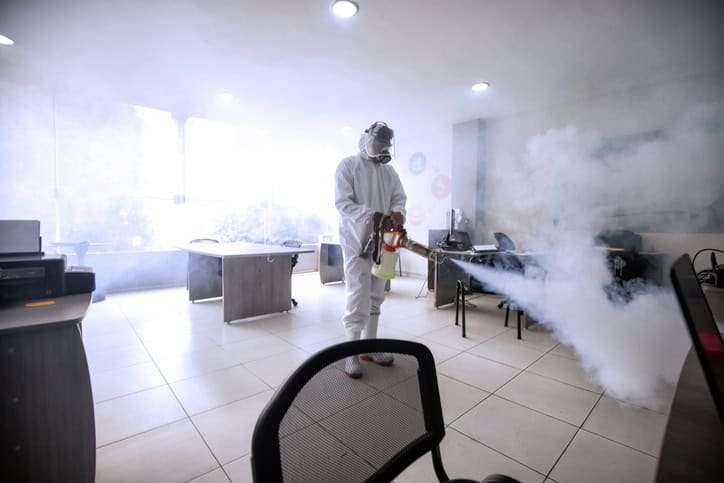
Post-construction cleaning is the first step toward operational readiness. It involves removing visible and invisible construction residuals that traditional janitorial cleaning cannot address.
Key activities typically include:
- Removal of drywall dust, adhesives, and fine particles.
- Detailed cleaning of walls, floors, ceilings, corners, coving, and fixtures.
- Clean-down of HEPA housings, light fixtures, and penetrations.
- Wipe-down and disinfection of doors, frames, vision panels, and grilles.
- Thorough vacuuming using cleanroom-approved HEPA equipment.
- Cleaning of electrical boxes, pass-throughs, and utility interfaces.
- Preparation of surfaces for disinfectants used in GMP operations.
The goal is to eliminate particulate load so environmental controls can stabilize and qualification can begin without background contamination interfering with results.
Phase 2: Pre-Occupancy Cleaning and Air System Stabilization
Before any equipment enters the space, the cleanroom must undergo specialized cleaning and stabilizing steps.
Important tasks include:
- Multiple rounds of top-to-bottom cleaning.
- Activation and stabilization of the HVAC and filtration system.
- Confirmation of pressure differentials.
- Early surface and airborne particle checks.
- Removal of any construction materials left behind.
- Preliminary disinfection to prepare for EMPQ.
During cleanroom commissioning, this phase reduces the risk of contamination being introduced during equipment setup and qualification activities.
Phase 3: EMPQ Cleaning — Preparing for Qualification
EMPQ cleaning supports the environmental monitoring performance qualification phase by creating the controlled conditions needed to establish baseline counts and verify cleanroom performance.
EMPQ cleaning typically includes:
- Validated cleaning steps performed in a controlled sequence.
- Use of approved disinfectants and sporicides.
- Documented contact times.
- Defined wipe-down techniques and directional flow.
- Cleaning aligned with the intended ISO classification.
- Preparation for static (at-rest) and dynamic (operational) EM phases.
This stage is crucial because particle or viable excursions during EMPQ can delay qualification, require re-cleaning, and extend project timelines. EMPQ cleaning ensures the cleanroom’s environment is stable, predictable, and compliant before monitoring begins.
Phase 4: Transition to Operational Cleaning Practices
Once EMPQ is completed and the cleanroom is ready for operational use, the cleaning approach shifts from commissioning to routine GMP maintenance.
This transition includes:
- Establishing daily, weekly, and periodic cleaning frequencies.
- Aligning cleaning SOPs with contamination risk levels.
- Integrating disinfectant rotation schedules.
- Identifying high-risk surfaces and traffic patterns.
- Preparing for ongoing audit and EM requirements.
- Training operators to maintain the cleanroom’s baseline conditions.
A cleanroom that begins its life in a stable, contamination-free state will perform better over time, with fewer environmental deviations and more predictable EM trends.
Common Mistakes That Delay Operational Readiness
Many commissioning delays stem from preventable cleaning oversights. Common issues include:
- Relying on non-specialized cleaners for construction cleanup.
- Incomplete removal of construction dust in high or hidden areas.
- Missing HEPA housings, lights, or air returns during cleaning.
- Not controlling traffic patterns after post-construction cleaning.
- Delaying HVAC stabilization until late in the process.
- Poor documentation of commissioning-phase cleaning steps.
- Initiating EMPQ before the room is contamination-free.
Each of these issues can lead to EM failures, rework, and operational delays.
The Role of Documentation During Commissioning
Documentation is essential throughout cleanroom commissioning, especially when preparing for EMPQ and early audits. Typical documentation includes:
- Cleaning logs.
- Disinfectant preparation records.
- Tool traceability.
- Pre- and post-cleaning particle measurements.
- Commissioning-phase work instructions.
- Records supporting contamination control decisions.
Strong documentation supports audit readiness later, demonstrating that the cleanroom was brought online using controlled, repeatable processes.
Maintaining a Contamination-Free State Post-Commissioning
Once operational, the cleanroom must remain in the contamination-free state established during commissioning. This requires:
- Routine validated cleaning cycles.
- Appropriate rotations of disinfectants and sporicides.
- Integration with environmental monitoring.
- Controlled movement of equipment and materials.
- Continuous adherence to gowning and behavioral SOPs.
Consistency is key—commissioning sets the standard, and ongoing cleaning maintains it.
Strong Commissioning Cleaning Sets Up Long-Term Success
Bringing a cleanroom from construction to operation is a high-risk transition period that demands specialized cleaning, decontamination awareness, and disciplined preparation. Effective cleanroom commissioning, backed by thorough post-construction cleaning and structured EMPQ cleaning, ensures the environment is stable, contamination-free, and ready for qualification.
If your facility needs specialized cleaning support to prepare controlled environments for qualification or operational readiness, VibraClean’s team can help. Contact us for more information.