





A cleanroom cleaning program is only as strong as the documentation that supports it. Even if cleaning practices are executed perfectly, a facility cannot demonstrate control unless the procedures, validation studies, and supporting records are complete, accurate, and readily accessible. This is especially important during inspections, where regulators expect to see the full lifecycle of GMP cleaning validation, from risk assessments and protocols to reports and long-term monitoring data.
A well-organised documentation package also enables internal teams to track cleaning effectiveness over time, support requalification cycles, and respond quickly to deviations or environmental monitoring concerns. Below is a comprehensive checklist of the essential documents needed for a compliant, audit-ready cleaning validation program.
Why Documentation Matters for GMP Cleaning Validation
In regulatory environments, documentation serves three purposes:
- It proves that the cleaning process is designed scientifically.
- It confirms that the process is executed consistently.
- It provides audit evidence to demonstrate long-term control.
Without proper documentation, even a validated process can be deemed non-compliant. Inspectors are trained to ask: Where is the data that shows your cleaning program works? If the documentation package is incomplete, outdated, or unorganised, the cleaning program will be viewed as unreliable.
This is why a complete documentation set is essential to any GMP cleaning validation effort.
Foundational Program Documents
These documents define the strategy, rationale, and risk basis for the cleaning program.
A compliant package includes:
- Cleaning and decontamination master plan.
- Risk assessments identifying surfaces, high-risk zones, and worst-case conditions.
- Facility layout diagrams showing classified areas.
- HVAC and airflow design documents that influence contamination risks.
- Material compatibility assessments for disinfectants and sporicides.
- Cleaning agent justification and rotation strategy.
These foundational documents show regulators how the cleaning program was built and why specific methods were chosen.
Cleaning Procedures and SOPs
Procedures must be clear, detailed, and aligned with the validated process. Required documents include:
- SOPs for manual cleaning steps.
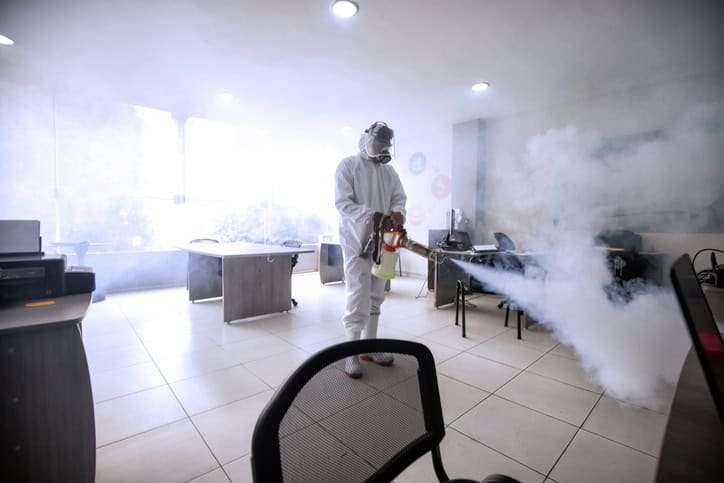
- SOPs for decontamination technologies (VHP, iHP®, fogging).
- Frequency tables for routine and periodic cleaning.
- Instructions for disinfectant preparation and dilution.
- Contact time requirements.
- Wipe and mop replacement rules.
- Material transfer cleaning procedures.
- High-touch and high-risk surface cleaning procedures.
SOPs must match the validated cycle precisely—any inconsistency creates significant audit exposure.
Validation Protocols
A complete GMP cleaning validation package includes:
- Validation objectives and scope.
- Defined acceptance criteria.
- Scientific rationale for sampling locations.
- Justification of sampling methods.
- Detailed step-by-step execution plans.
- Identified worst-case locations and conditions.
- Defined number of validation runs (typically three).
- Documentation of operator qualifications prior to execution.
QA must approve protocols before any validation work begins.
Sampling and Testing Documentation
Validation cannot occur without reliable data. Required documentation includes:
- Swab and contact plate procedures.
- Sampling maps showing exact locations.
- Sample handling and incubation records.
- Lab methods used for microbial testing.
- Calibrations for particle counters or environmental monitoring devices.
- Biological indicator records (if sterilant validation is required).
This section provides the scientific evidence behind cleaning effectiveness.
Validation Execution Records
Execution records prove that the validation protocol was followed exactly as written. Key documents include:
- Completed validation data sheets.
- Operator logs and signatures.
- Records of disinfectant lot numbers and expiry dates.
- Time-stamped cleaning sequences.
- Notes on deviations or anomalies.
- Photographic evidence of sampling locations when applicable.
These records often represent the bulk of cleaning documentation and must be retained for the lifecycle of the cleaning program.
Validation Summary and Final Reports
After the validation runs are completed, the results must be analysed and summarised. Required documents include:
- Summary of all microbial and particle data.
- Trend analysis across validation runs.
- Deviation investigations and corrective actions.
- Confirmation that acceptance criteria were met.
- Recommendations for SOP updates or frequency adjustments.
- Final approval sign-offs by QA and operations.
This report is a central piece of audit evidence, as it demonstrates that the organisation has scientifically established cleaning effectiveness.
Change Control and Revision Tracking
Validation is not a one-time activity. Facilities must track changes to ensure the cleaning process remains compliant. Documents include:
- Change control records for disinfectant changes.
- Updates to tools or cleaning materials.
- Facility layout or classification changes.
- HVAC modifications that affect contamination risk.
- Revision histories for all cleaning SOPs.
- Revalidation triggers and execution records.
Regulators expect change control to be tightly linked to cleaning validation lifecycle management.
Training and Operator Qualification Records
Operators must be trained and qualified on both the cleaning procedures and the validated process. Required documentation includes:
- Initial training records.
- Qualification and observation records.
- Periodic requalification logs.
- Training updates after SOP revisions.
- Gowning qualification (if related to cleaning tasks).
Inspectors often interview operators and review their training files—gaps in these records frequently lead to audit observations.
Ongoing Monitoring and Trending Records
Once validated, ongoing performance must be monitored. Essential records include:
- EM trend reports.
- Alert and action limit investigations.
- Cleanroom classification results.
- HVAC performance data.
- Internal audit findings related to cleaning.
- Periodic review and revalidation reports.
These records demonstrate that cleaning effectiveness remains consistent over time.
Strong Documentation Makes GMP Cleaning Validation Defensible
A cleanroom cleaning program cannot be considered validated without a complete, organised, and defensible documentation package. When facilities maintain strong cleaning documentation, they not only support GMP cleaning validation but also protect themselves during audits by having clear, accessible audit evidence that demonstrates control.
If your team needs support building validation documentation sets, organising SOPs, or preparing for inspections, our specialists can help. Contact us to discuss your requirements.