





Home
Specialized Service Packages
When and How to Use Hydrogen Peroxide and iHP® for Cleanroom Decontamination
Maintaining a controlled, contamination-free cleanroom is essential for any GMP-regulated facility. Daily cleaning and environmental monitoring protect routine operations, but certain events require a deeper, validated response. When contamination risks escalate—whether due to environmental monitoring excursions, spills, construction work, or shutdowns—a full cleanroom decontamination cycle becomes necessary to restore sterility and confidence in the environment.
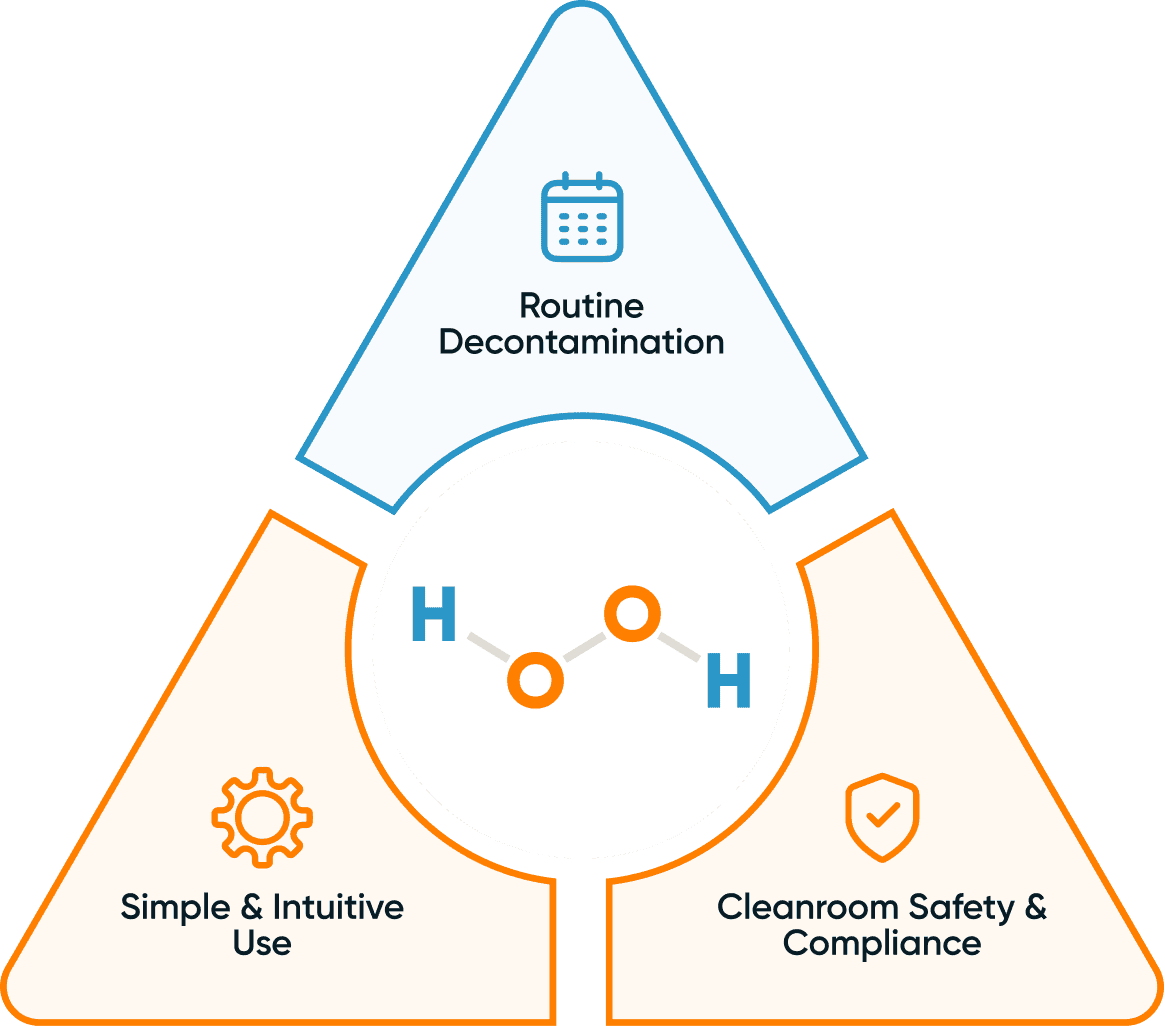
Hydrogen peroxide–based decontamination systems are now the industry standard for GMP environments. Technologies such as vaporized hydrogen peroxide (VHP/HPV), aerosolized hydrogen peroxide fogging, and advanced iHP sterilization (ionized hydrogen peroxide) provide powerful, residue-free bio decontamination that meets regulatory expectations for high-risk environments.
This guide explains when to use hydrogen peroxide-based technologies, how each system works, and what GMP facilities need to know to execute validated cycles safely and effectively. It includes detailed operational steps, regulatory context, safety considerations, and best-practice recommendations aligned with ISO 14644, EU GMP Annex 1, and ISPE contamination control principles.
Understanding Hydrogen Peroxide as a Decontamination Agent

Why Hydrogen Peroxide Is Effective for Decontamination
- It kills bacteria, spores, fungi, and viruses, including hardy spore-forming organisms such as Geobacillus stearothermophilus.
- It leaves no hazardous residue. This meets GMP expectations for cleanroom compatibility and protects product integrity.
- It is registered as a disinfectant/sterilant with EPA and DIN-listed with Health Canada, which supports regulatory defensibility.
- It is safe for most cleanroom materials, HEPA filters, stainless steel, and critical surfaces when used correctly.
Comparing Fogging, VHP, and iHP® Technologies
- Liquid application (wipe/spray): used for routine disinfection, not room-scale sterilization.
- Vaporized hydrogen peroxide (VHP/HPV): a high-concentration vapor that condenses slightly on surfaces for sporicidal activity.
- Hydrogen peroxide fogging: aerosolized droplets that provide broad-area coverage with lower condensation risk.
- iHP® (ionized Hydrogen Peroxide): a low-concentration solution passed through a cold plasma arc, creating ionized reactive oxygen species.
- VHP requires tight environmental control and produces predictable sterilization cycles.
- Fogging offers simplicity and speed for large rooms.
- iHP sterilization excels in penetrating complex geometries, minimizing cycle time, and protecting sensitive equipment.
Each method has its ideal use case depending on the cleanroom’s classification, equipment layout, and operational risk.
Here is a easy way to determine the best method
Recommendation
Recommendation
Recommendation
Recommendation
What Is iHP® and How Does It Differ from Traditional VHP?
- Tiny particle size (<1 micron), allowing deeper penetration into crevices and behind complex equipment.
- Lower risk of damaging electronics or sensitive materials due to the absence of condensation phases.
- Rapid cycle times, often significantly shorter than VHP.
- Faster aeration, reducing downtime and allowing quicker return to GMP operations.
- Consistent performance against biologically resistant organisms when properly validated with biological indicators.
When to Use Hydrogen Peroxide Decontamination in GMP Facilities
Common triggers include:
- Environmental monitoring excursions for viable or non-viable contamination
- Construction, renovation, HVAC work, or any activity that breaches walls or ceilings
- Product spills involving biologicals, radiopharmaceuticals, or toxic compounds
- New equipment installations, especially for aseptic areas
- Mold or fungal contamination
- Batch changes involving potent or sensitive products
- Pre-commissioning and recommissioning phases
- Shutdown and startup cycles
A contamination control strategy should outline specific triggers and decision trees that define when hydrogen peroxide fogging, VHP, or iHP® must be deployed.
A practical decision framework:
- Use hydrogen peroxide fogging for large areas requiring broad, fast coverage and moderate decontamination needs.
- Use VHP when a traditional, deeply validated sterilization process is required, particularly in Grade A/B environments.
- Use iHP sterilization when rapid turnaround is needed, when equipment sensitivity is a concern, or when the cleanroom layout makes fogging coverage unpredictable.
Facilities often employ multiple methods depending on room classification and operational context.
Step-by-Step Guide to Running a Hydrogen Peroxide or iHP® Decontamination Cycle

Step 1: Pre-Decontamination Planning
Effective planning includes:
- A risk assessment aligned with Annex 1’s contamination control strategy.
- Full clearance of materials not compatible with hydrogen peroxide.
- Removal or wrapping of sensitive electronics as needed.
- HVAC isolation and room sealing.
- Placement of biological indicators (BIs) and chemical indicators (CIs) according to ISO 14644-5 guidelines.
- Verification that equipment and sensors are calibrated and functioning.
Documentation at this stage is critical, as deviations discovered later can compromise the entire cycle.
Step 2: Running the Cycle (Fogging, VHP,
or iHP®)
- Fogging: 20–60 minutes
- VHP: 30–120 minutes
- iHP®: 5–30 minutes
Step 3: Documentation and Validation
Requirements
GMP expectations require robust evidence for every cycle:
- Placement maps for BIs/CIs
- Cycle parameters: injection time, dwell time, aeration
- Peak concentration levels
- Deviation logs
- Operator qualifications
- Safety monitoring records
- QA release signature
Data must adhere to ALCOA+ principles—attributable, legible, contemporaneous, original, accurate, and complete.
Safety Considerations for Hydrogen Peroxide and iHP®
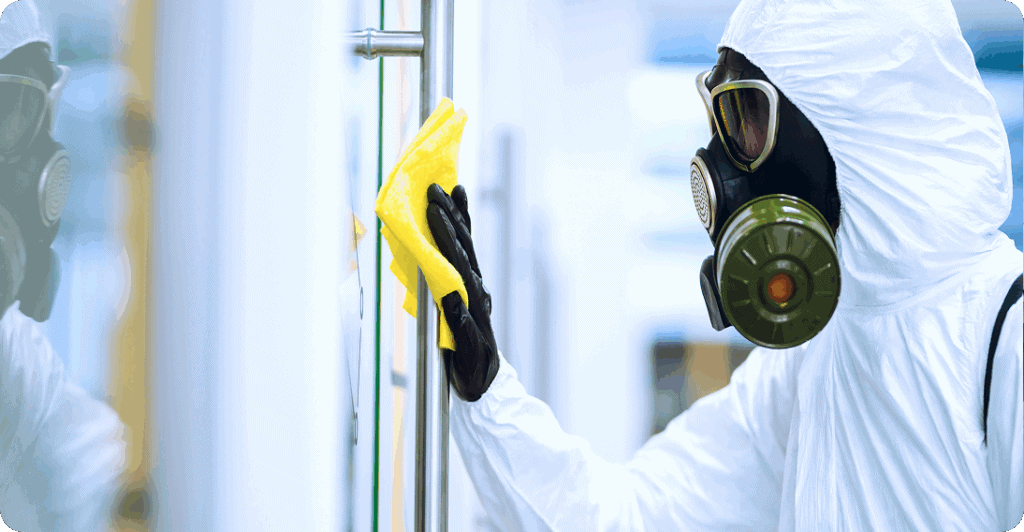
- PPE (respirators, gloves, eye protection) when handling concentrated solutions.
- Exclusion zones during cycles.
- Continuous monitoring of H₂O₂ ppm levels.
- OSHA and ACGIH limits must be followed rigorously.
- Some metals and elastomers may react to prolonged, high-concentration hydrogen peroxide.
- VHP systems can cause condensation, which is harmful to electronics.
- iHP® reduces these concerns, but is not universally risk-free—conduct compatibility checks.
- Personnel exposure must remain below 1 ppm before room re-entry.
- Equipment must comply with EPA/Health Canada labeling for disinfectants.
- SOPs must define emergency stops, spill procedures, and sensor calibration schedules.
How to Choose the Right Decontamination Method
- ISO class and GMP grade of the room.
- Whether the environment is sterile or non-sterile.
- Geometry and equipment complexity.
- Downtime tolerance.
- Budget constraints.
- Material compatibility.
- Frequency of required cycles.
- Need for validated sterilization versus broad-area microbial reduction
When Outsourcing Is the Optimal Choice
- Proper BI/CI placement and analysis.
- Validated cycle design.
- Minimal downtime.
- QA-ready documentation.
- Regulatory defensibility.
- Safe operation with complex or sensitive equipment.
Hydrogen Peroxide and iHP® Are Essential Tools for Modern GMP Decontamination
Hydrogen peroxide technologies—whether delivered through hydrogen peroxide fogging, vaporization, or iHP sterilization—have become indispensable for restoring controlled conditions in cleanrooms. They allow facilities to quickly and effectively eliminate microbial contamination, respond to critical events, and maintain compliance with evolving regulatory expectations.
As cleanrooms become more complex and production timelines more demanding, choosing the right decontamination method is essential. Whether your facility requires rapid turnaround, deep sterilization, or protection for sensitive electronics, hydrogen peroxide–based systems offer validated, compliant solutions.
If you are evaluating your contamination control strategy or preparing for a shutdown, recommissioning, or EM-driven event, now is the time to strengthen your approach.