


Hydrogen peroxide has become one of the most trusted technologies for restoring cleanroom control in regulated environments. Whether you operate a pharmaceutical cleanroom, a radiopharma suite, a biotech lab, or a CDMO production area, you need fast, validated, and reliable methods to eliminate microbial contamination. That is why so many facilities rely on the benefits of hydrogen peroxide decontamination as part of their contamination control strategy.
Hydrogen peroxide systems—delivered through vapor, fog, or ionized formats—provide broad-spectrum efficacy, safe residue breakdown, and strong alignment with GMP expectations. For organizations focused on minimizing downtime and protecting product quality, hydrogen peroxide offers a proven, defensible approach that integrates smoothly into modern GMP decontamination requirements.
Below are the top 8 advantages this technology offers for regulated cleanrooms.
1. Broad-Spectrum Efficacy Against a Wide Range of Organisms
One of the most apparent benefits of hydrogen peroxide decontamination is its ability to neutralize a full range of microbial risks, including bacteria, viruses, fungi, and spores. This level of performance is critical for biopharmaceutical, aseptic, and radiopharmaceutical environments, where even small microbial excursions can jeopardize batches, timelines, and compliance.
Hydrogen peroxide is also highly effective against resistant spore-forming organisms such as Geobacillus stearothermophilus, making it ideal for critical spaces where sterility is non-negotiable.
2. Residue-Free Breakdown Supports Sensitive Environments
Hydrogen peroxide naturally decomposes into water and oxygen, leaving no harmful chemical residue. This makes it ideal for:
- Cleanrooms with electronic instrumentation.
- ISO-classified environments with sensitive materials.
- Bioprocessing equipment that cannot tolerate corrosive byproducts.
Because the chemistry breaks down safely, cleaning teams do not have to perform additional rinse steps after decontamination, supporting efficient biopharma cleaning workflows.
3. Strong Alignment with GMP Expectations
Regulators expect facilities to demonstrate validated, reproducible decontamination strategies. Hydrogen peroxide supports this requirement exceptionally well. It is DIN-registered, EPA-approved, and widely used across industries governed by EU GMP Annex 1 and ISO 14644.
Hydrogen peroxide technologies also integrate seamlessly with validation practices, including the placement of biological indicators (BIs), documentation of cycle parameters, and adherence to ALCOA+ data integrity principles. This makes hydrogen peroxide a natural fit for GMP decontamination programs in both sterile and non-sterile production environments.
4. Flexible Delivery Methods for Different Cleanroom Designs
Another key benefit of hydrogen peroxide decontamination is its flexibility. Facilities can select the delivery method that best suits their classification, room geometry, and production constraints.
Common options include:
- Vaporized hydrogen peroxide (VHP/HPV).
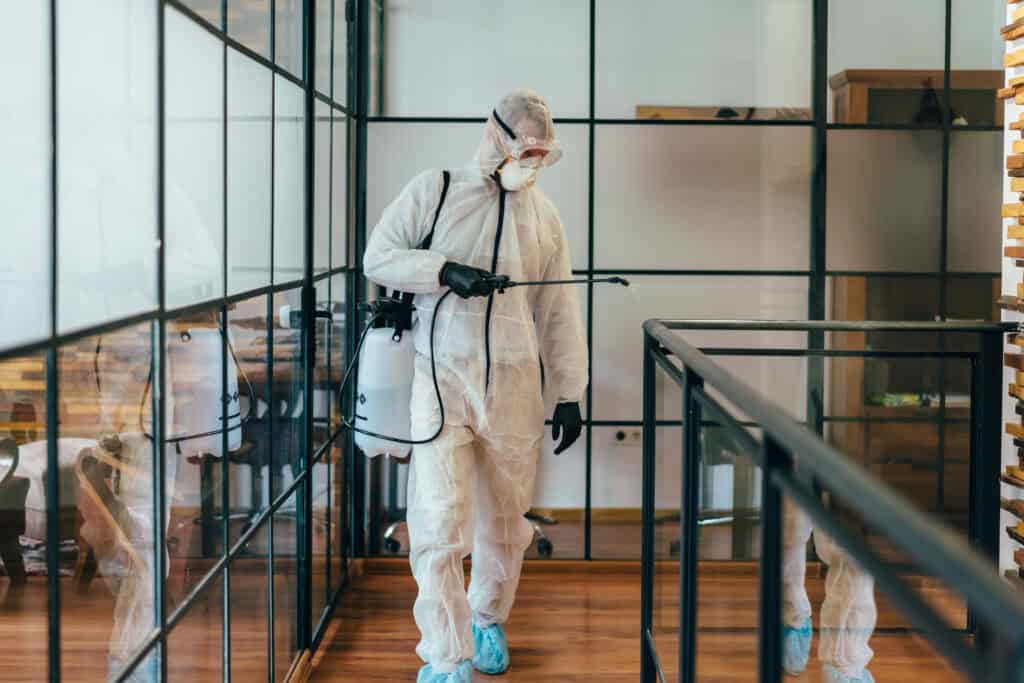
- Aerosolized or fogged systems.
- Ionized hydrogen peroxide (iHP®) for complex geometries.
- Portable units for equipment decontamination.
- Integrated wall-mounted systems for routine cycles.
This flexibility ensures that even irregularly shaped rooms, heavily equipped suites, or high-traffic clean zones can achieve consistent microbial reduction.
5. Rapid Cycle Times Minimize Operational Downtime
Downtime is expensive in regulated manufacturing, especially for biopharma, radiopharma, and aseptic production. Hydrogen peroxide systems are engineered for efficiency, offering shorter cycles than many legacy decontamination methods.
Fogging and aerosolized H₂O₂ systems achieve rapid dispersion and short dwell times. iHP® technology delivers even faster turnaround with lower aeration requirements, thanks to lower concentration and reduced condensation risk. This allows facilities to return to operation sooner and maintain tighter production schedules.
6. Excellent Material Compatibility and Lower Corrosion Risk
Hydrogen peroxide is well-suited for a wide variety of cleanroom materials, including stainless steel, HDPE, epoxy floors, HEPA housings, and most plastics. This compatibility reduces the risk of degradation during routine or event-driven decontamination cycles.
When properly assessed, hydrogen peroxide systems pose minimal risk to:
- Sensitive monitoring equipment.
- Stainless steel bioprocessing systems.
- Pass-throughs and transfer hatches.
- Isolator exteriors and enclosures.
This is especially true for lower-concentration solutions used with iHP® technologies, which avoid the condensation phases associated with traditional vapor systems.
7. Validated, Measurable Performance Through Indicators
Validated performance is a cornerstone of GMP decontamination, and hydrogen peroxide supports robust, measurable validation activities. Facilities can easily integrate:
- Biological indicators (BIs) for verifying sporicidal activity.
- Chemical indicators (CIs) for confirming adequate distribution.
- Cycle documentation for audit readiness.
- Repeatable cycle parameters for ongoing qualification.
This level of defensibility gives QA teams confidence and equips organizations to respond effectively to regulatory audits or customer inspections.
8. Supports Biopharmaceutical, Radiopharmaceutical, and High-Risk Environments
Hydrogen peroxide technologies are widely adopted across advanced manufacturing environments because they deliver consistent, validated results at scale. This makes them ideal for:
- Aseptic fill-finish cleanrooms.
- Biopharmaceutical production suites.
- Radiopharmaceutical hot labs.
- Compounding pharmacies.
- Advanced therapy (ATMP/CGT) manufacturing.
- Research and testing labs
Whether used for routine cycles or emergency response, hydrogen peroxide plays an essential role in biopharma cleaning programs where microbial control is mission-critical.
Hydrogen Peroxide Remains the Gold Standard for GMP-Grade Decontamination
Hydrogen peroxide remains one of the most effective, efficient, and GMP-compliant decontamination technologies available. With strong efficacy, flexible application methods, rapid cycle times, and exceptional material compatibility, it supports both routine and urgent interventions across regulated industries.
For organizations evaluating the benefits of hydrogen peroxide decontamination, the advantages are clear: faster recovery, stronger compliance, reduced risk, and defensible validation. As cleanrooms become more complex and production environments become more demanding, hydrogen peroxide will remain an essential part of contamination-control strategies in life sciences and biotech.
If you need help evaluating your current decontamination procedures or implementing a validated hydrogen peroxide solution, our team can support every step—from risk assessment to full-cycle execution and GMP-ready documentation. To learn more, contact us.