


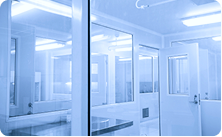







Cleanroom classifications and environmental control requirements evolve over time, and staying aligned with ISO 14644 standards is essential to maintain compliance in regulated industries. From pharmaceutical manufacturing and biologics processing to electronics, aerospace, and medical device production, ISO 14644 defines the core framework for classifying, monitoring, and maintaining cleanrooms. When updates are published, they often require changes to operational practices, documentation, validation, and environmental monitoring programs.
The most recent updates to ISO 14644 Part 1 and Part 2 introduced significant changes to how particle testing is performed, how sampling locations are selected, and how ongoing monitoring is justified. This cleanroom compliance update explores what changed, why it matters, and how facilities can adapt without disrupting operations.
What ISO 14644 Covers—and Why Updates Matter
The ISO 14644 series establish international standards for cleanroom performance. These standards define how organizations classify cleanrooms, test particle concentration, design monitoring programs, train personnel, and maintain operational control.
The most influential standards include:
- ISO 14644-1: Cleanroom classification based on maximum particle concentrations.
- ISO 14644-2: Requirements for demonstrating continued cleanroom performance.
- ISO 14644-5: Operational and personnel practices.
- ISO 14644-3: Test methods for airflow, pressure, and other physical parameters.
Updates to these standards influence:
- How cleanrooms are designed.
- How testing is performed.
- How environmental monitoring is structured.
- What evidence must be documented.
- How risk assessments are applied.
Facilities that ignore new requirements quickly fall behind and may face audit challenges and preventable findings.
Key Updates to ISO 14644-1 and ISO 14644-2
The most significant updates to ISO 14644 standards involve the methodology for selecting and testing particle sampling locations.
Change #1: Risk-Based Determination of Sampling Locations
Previous versions allowed simplified formulas to determine the number of sampling points. The updated standard requires:
- A formal, documented risk assessment.
- Identification of contamination risks from processes, personnel, and airflow.
- More justified sampling distribution across the room.
This ensures testing focuses on real contamination risks—not only room geometry.
Change #2: No More “Square Root” Formula
Older versions used the square-root calculation (√A) to determine the minimum number of sample locations. This was considered too simplistic for complex cleanrooms.
The updated approach requires:
- More sampling locations in high-risk zones.
- Fewer in areas with limited airflow disruption.
- Flexibility based on actual risk factors.
Facilities must now justify their sampling strategy rather than rely on a universal formula.
Change #3: Harmonized Testing Methods
ISO 14644-1 and -2 emphasize consistent, validated methods for:
- Particle counting.
- Airflow uniformity.
- Pressure differentials.
- HEPA filter performance.
- Recovery time.
Standardized test methods reduce variability between inspections and improve reproducibility.
Change #4: Stronger Focus on Ongoing Monitoring
ISO 14644-2 now stresses:
- Continuous performance verification.
- Routine monitoring based on risk.
- Justification of sampling frequency.
- Direct linkage to environmental classification.
This aligns with the expectations of the FDA, Health Canada, and EMA for lifecycle-based monitoring.
Operational Impacts You Should Expect
When ISO standards change, operations must change as well. Even if the updates seem technical, their impact is felt in day-to-day monitoring, documentation, and quality oversight.
Facilities can expect changes in several areas.
Environmental Monitoring Programs
EM teams may need to:
- Redefine sampling points.
- Adjust monitoring frequencies.
- Improve justification in sampling plans.
- Revalidate alert and action limits.
- Increase monitoring in high-risk zones.
This is one of the most visible areas affected by the cleanroom compliance update.
HVAC and Airflow Validation
Although HEPA integrity testing remains a separate requirement, airflow verification becomes more critical when sampling points reflect real risk. Facilities may need to:
- Perform new airflow visualization studies.
- Evaluate pressure differential behavior.
- Reassess air change rates.
These tests help confirm that the environment supports the updated standards.
Changes to SOPs and Qualification Documentation
SOPs affected by ISO updates may include:
- Cleanroom classification procedures.
- Airflow and HEPA testing procedures.
- EM sampling and trending procedures.
- Investigation and CAPA workflows.
Facilities that fail to update SOPs after a standard change may be flagged during inspections.
Training and Competency Requirements
Personnel involved in the following must understand the updated requirements and be qualified to execute revised procedures.
- Cleanroom testing.
- Cleaning and disinfection.
- Environmental monitoring.
- Maintenance.
- Quality oversight.
Increased Documentation Needs
ISO updates often require improved:
- Risk assessments.
- Sampling justification.
- Monitoring maps.
- Test method records.
- Classification reports.
Documentation is the evidence inspectors look for to confirm ongoing control and compliance.
Common Audit Findings Related to ISO 14644 Updates
Regulators increasingly check whether facilities have incorporated ISO changes. Common findings include:
- Sampling locations justified poorly or not at all.
- Reliance on old square-root formulas.
- Outdated classification or monitoring SOPs.
- No linkage between risk assessments and monitoring points.
- Missing documentation of airflow behavior.
- EM programs are inconsistent with the ISO framework.
These gaps can lead to observations, warnings, or increased oversight.
How Facilities Should Prepare for Future Updates
The ISO 14644 series evolves as new technologies, monitoring tools, and industry risks emerge. Being proactive helps facilities stay compliant before updates become mandatory.
Best forward-looking practices include:
- Performing annual reviews of standards.
- Updating risk assessments regularly.
- Ensuring sampling rationale is well documented.
- Aligning EM programs with lifecycle principles.
- Training staff on standard changes early.
- Reviewing air handling performance after any facility change.
Operational readiness depends on staying ahead of evolving ISO 14644 standards rather than reacting after an inspection.
ISO Changes Strengthen Cleanroom Control—If Facilities Keep Up
Updates to ISO 14644 standards improve accuracy, risk management, and environmental control, but they also require cleanrooms to adjust procedures, documentation, and monitoring practices. By staying current with every cleanroom compliance update, facilities can strengthen contamination control, reduce audit findings, and maintain reliable production performance.
If your team needs support updating monitoring plans, revising SOPs, or aligning operations with ISO 14644 expectations, our specialists can help. Contact us to learn more.